A fiber bottle may mention cholesterol or heart health even when you first noticed it in the digestive-health aisle. That wording deserves a closer read. The ingredient, type of fiber, quantity and surrounding diet all matter, and a general claim should not be treated as a promise that a particular capsule routine will change your laboratory result.
This guide explains the U.S. soluble-fiber claim framework and the questions worth bringing to a healthcare professional. It does not recommend a treatment amount, calculate a capsule regimen or advise replacing cholesterol medicine. A regulatory claim condition and an individual cholesterol plan are different things.
Begin with the exact wording
A statement about supporting cholesterol already in a normal range is not the same as a claim to treat high cholesterol. A label may also discuss the relationship between a dietary pattern and reduced heart-disease risk. Read the full statement and its qualifying text rather than stopping at a heart-shaped symbol.
The current federal regulation on certain soluble-fiber health claims connects eligible fiber sources with diets low in saturated fat and cholesterol. It does not describe fiber as the only recognized way to reduce coronary heart-disease risk or promise a particular degree of risk reduction.
That distinction protects the meaning of the claim. A buyer should not have to infer its qualifications from a separate search. When comparing products, save the complete label statement and the serving information alongside it. Our Metamucil review shows why purpose-specific wording and readable label details matter.
Ingredient grams are not automatically qualifying fiber grams
The regulation identifies particular eligible sources. Its psyllium provision refers to soluble fiber from qualifying psyllium seed husk. A capsule's total weight, an herbal blend weight and a declared soluble-fiber amount are not interchangeable measurements.
For the psyllium-related claim, the text identifies a daily dietary intake of at least 7 g of the relevant soluble fiber, and a product eligibility condition of at least 1.7 g per reference amount customarily consumed. These are regulatory context, not instructions to raise your intake or take a calculated number of capsules.
Other conditions also apply, including the specified source and wider labeling requirements. This guide does not certify that any reviewed product qualifies. The blend-weight file explains why filling a missing soluble-fiber field with the blend mass would create a false comparison.
A mixed formula needs a more precise question
A blend might contain psyllium along with oat fiber, guar gum or another ingredient. Even when a total soluble-fiber amount is declared, it may not identify how much comes from each source. The declaration alone cannot establish that all of it belongs to the source specified in a particular health claim.
Our Nature's Way Fiber Fusion review provides an example of a label with 1 g soluble fiber inside a four-ingredient blend. The separate ingredient weights are not disclosed. We do not treat that gram as a verified gram of psyllium-derived soluble fiber.
Likewise, an oat hull ingredient should not silently become the oat beta-glucan preparation discussed in another source. Read the label name closely. Product-specific composition is the bridge between an ingredient reference and a finished formula, and that bridge can be incomplete.
Keep the laboratory result in its clinical setting
NHLBI's cholesterol treatment overview describes a plan based on cholesterol levels, overall cardiovascular risk and the person's circumstances. Lifestyle measures and, when indicated, medicines can both have a role. A supplement purchase does not replace that assessment.
If you already take a cholesterol medicine, discuss a proposed fiber addition with the clinician or pharmacist rather than treating the bottle's wording as permission to stop the prescription. Your wider medicine list, swallowing history and any fluid restrictions can also affect the practical decision.
A person cannot reliably judge LDL cholesterol from how digestion feels. The follow-up plan and appropriate measurements come from the healthcare team. More regular bowel movements, if they occur, would not by themselves establish a particular cholesterol change or heart-disease risk reduction.
Do not turn the claim into a capsule challenge
It is possible to perform arithmetic from a label and still arrive at an inappropriate plan. Taking extra capsules to chase a number can conflict with product directions, liquid requirements or individual precautions. The regulatory text was not written as a personalized dosing calculator.
The serving-size guide distinguishes a facts-panel serving from manufacturer directions for a particular purpose. The water-and-medicine guide explains why swallowing and medication questions stay part of the discussion. A capsule format does not remove the need to consider them.
Our amount translator changes grams to milligrams and shows cautious per-capsule calculations where the source is legible. It does not calculate a cholesterol-treatment intake. Missing amounts remain missing, and rounded label numbers remain rounded even after a unit conversion.
Compare the documentation before comparing the purchase
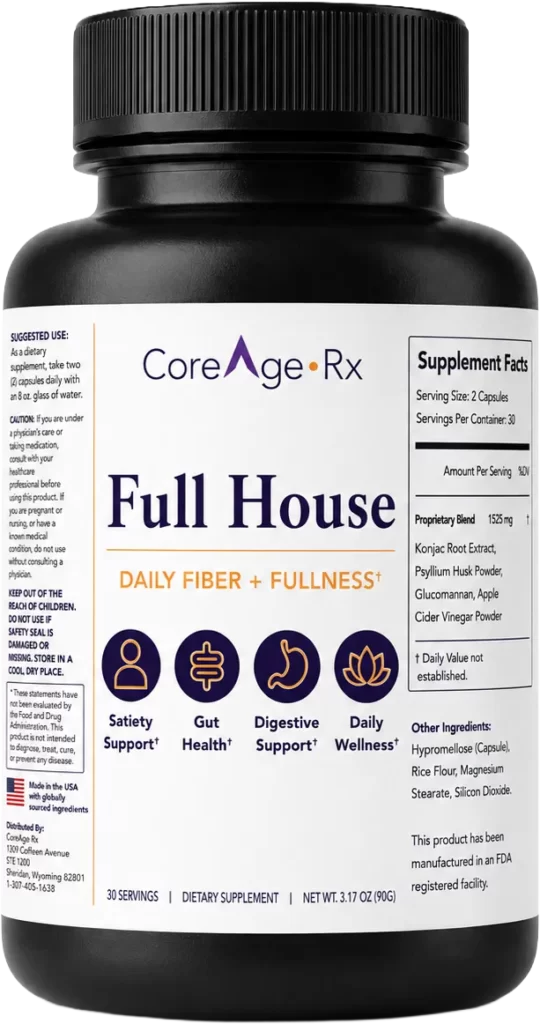
The CoreAge Full House record includes a proprietary blend weight, with separate dietary-fiber and soluble-fiber amounts not established from the reviewed image. Its sponsored first position is a commercial arrangement. It is not evidence that the formula meets a cholesterol-claim condition or improves a particular lipid result.
Other records, such as NOW Psyllium Husk Caps, disclose more fiber detail. That can make a label comparison clearer without becoming an instruction to use that product. An accurately documented amount and a clinically suitable plan are still separate judgments.
A focused question for your next visit is whether an additional fiber source has a useful role in the cholesterol plan already being followed. Bring the exact label and complete claim. Ask what outcome would be monitored, which precautions apply and how it fits the existing plan, rather than selecting a regimen from the front of a bottle.
Sources for this file
Individual access dates appear below. Access date is not a new clinical review date.
- 21 CFR 101.81 — soluble fiber and coronary heart disease claims
Current regulatory text. Checked 2026-09-27. Source-specific diet/label requirements: 7 g daily soluble fiber from qualifying psyllium and 1.7 g per reference amount eligibility condition, among other requirements. Not a dose plan or certification of any reviewed formula.
- NHLBI — cholesterol treatment
Federal health guidance. Checked 2026-09-27. Individual risk, lifestyle and medicine context. April 19, 2024 update is separate from access date; no prescription changes advised.
- Fiber Fusion Daily — right-side facts image
Visually inspected label. Checked 2026-09-27. Five capsules, 30 servings, 3.1 g proprietary blend, 3 g dietary fiber including 1 g soluble and 2 g insoluble. Psyllium, oat hull, guar gum and citrus pectin; individual amounts unavailable. Liquid and swallowing warnings visible.
- Metamucil Original Psyllium Fiber Capsules
Manufacturer / US product. Checked 2026-09-26. 100-count selection, purpose-specific directions and warnings. Retail checkout price not established. No claims borrowed from powders or gummies.
- MedlinePlus: Psyllium
Public health / medication information. Checked 2026-09-26. General psyllium precautions, liquid requirements and medicine-specific interactions. Not an evaluation of these finished supplements.
- Full House bottle label
Manufacturer / label image. Checked 2026-09-26. Two capsules; 1,525mg proprietary blend. No separate dietary fiber amount or individual ingredient weights visible. Image inspected directly.