A product can have a plant-based featured ingredient and still leave important questions unanswered about its capsule shell, other ingredients or possible allergen contact. Turning the bottle around is a separate step from recognizing the fiber name on the front. The small-print lists describe different parts of the product.
This guide uses the Full House, NOW and US Solgar records checked September 26, 2026 to explain those differences. Manufacturer statements are identified as such. We have not independently audited an allergen program, certified a product or tested any lot.

The shell answers a narrow question
A capsule has a shell as well as its contents. Full House’s label lists hypromellose for the capsule, NOW also identifies a hypromellose cellulose capsule, and Solgar lists vegetable cellulose among its other ingredients. Those details help identify the materials the manufacturers declare for these products.
They do not establish that all fiber capsules use the same materials. A statement about a vegetable shell also does not prove that every ingredient, processing aid or facility practice satisfies a particular dietary or allergy requirement. If that requirement determines a purchase, ask about the complete finished product and the specific current package.
The Solgar review includes the exact US product identifier. Regional packages with similar names can carry different wording. A familiar brand name should not replace checking the label of the item actually being sold.

Other ingredients are part of the record
The Full House image lists rice flour, magnesium stearate and silicon dioxide alongside hypromellose. The NOW page lists vegetable-source stearic acid with its capsule material. The Solgar page lists vegetable magnesium stearate and vegetable cellulose.
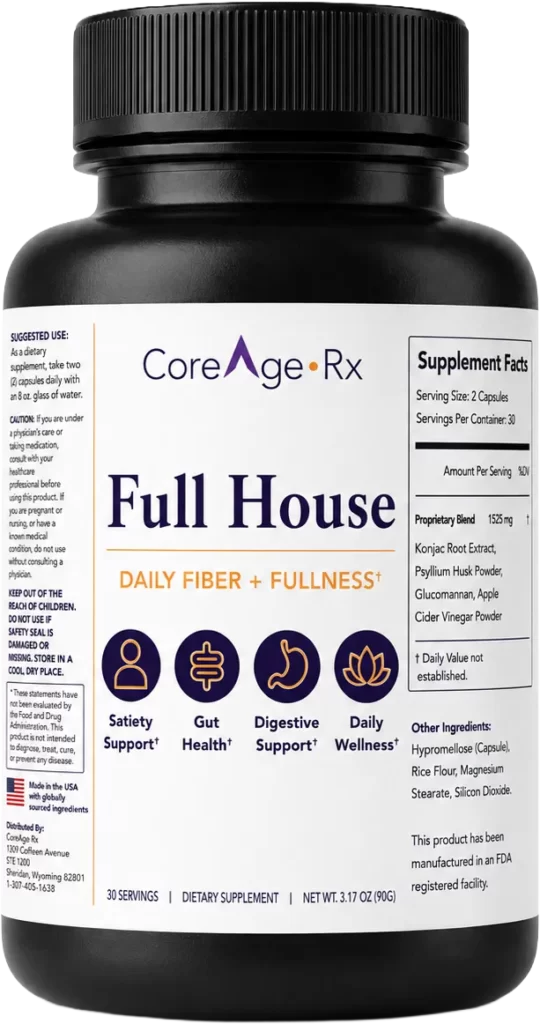
These lists should be transcribed without automatically labeling every unfamiliar name harmful or every short list superior. A list’s length is not a clinical safety score. Nor does the absence of a featured ingredient from the “other ingredients” section prove it is missing; featured ingredients may be declared in the facts panel instead.
The Full House review keeps its four-ingredient proprietary blend separate from its other ingredients. That separation helps a reader understand which quantities are declared and which substances are merely named. It does not supply undisclosed ingredient weights.
Cross-contact wording can change the decision
NOW’s page explicitly says the product may contain traces of sesame. It also describes ingredients not used in manufacturing and a facility that processes other allergen-containing ingredients. These statements belong together. Selecting only the reassuring part would give an incomplete account of the manufacturer’s record.
For someone with a relevant allergy, a trace warning may matter more than the number of ingredients or the shell’s plant origin. A retailer’s shortened description may omit it. The NOW review retains the warning, and readers should still check the current package and contact the manufacturer for their specific concern.
Our table cannot determine an individual allergy risk. It also cannot use the lack of a retrieved cross-contact statement for another brand as proof that no cross-contact is possible. “No statement verified” and “verified absent” are different conclusions.

Plant origin does not rule out allergy
Psyllium itself can cause allergic reactions. The MedlinePlus monograph asks readers to discuss psyllium allergy and cautions against breathing in powder because inhalation can provoke a reaction. Encapsulating an ingredient does not make the underlying allergy question disappear.
A person with a known sensitivity should not use a general ingredient dictionary to test whether a reaction will occur. The appropriate discussion concerns the actual substance, the product and the person’s history. New breathing difficulty or other severe symptoms need urgent attention rather than a search for a different capsule brand.
Badges describe claims with a scope
Solgar’s US page presents non-GMO, vegan, gluten-free, dairy-free and kosher claims. This publication reports them as manufacturer statements. We have not independently validated each current certification or matched a separate certifier record to the bottle reviewed. A badge can be relevant without becoming evidence for every other quality question.
For example, a dietary preference claim does not establish a product’s effect on constipation. A manufacturing statement does not identify a clinical trial, and an ingredient exclusion does not establish how the product interacts with medicines. The water and medicines guide covers another layer that a capsule-shell description cannot resolve.

Ask for documentation that matches the question
If a question concerns an allergen, ask the manufacturer about the exact current formula and relevant manufacturing controls for the product and lot. If it concerns a certification, ask for a current record with its product scope. If it concerns contaminants, a lot-matched laboratory report should identify the sample, date, methods or analytes and results.
A generic quality logo cannot answer all three questions at once. FDA’s consumer guidance also explains that supplements do not receive premarket approval for safety and effectiveness. References to a facility or a manufacturing standard should not be enlarged into approval of the finished supplement.
Keep the complete label with the buying note
Before paying, compare the current facts panel, other ingredients, warnings, count and product identifier with the item in the cart. Save the relevant information if a dietary requirement is important to the purchase. The price and supply guide addresses the order details that sit alongside those product details.
The best-of comparison deliberately leaves unknown fields open. CoreAge’s sponsored first position does not certify its allergen status or establish better tolerability. A careful comparison respects both the information a manufacturer supplies and the limits of what this desk has independently verified.

Open a related file
The Nutricost review identifies hypromellose and rice flour, while the Organic India review records organic pullulan. A different shell does not by itself establish better swallowing, lower allergy risk or clinical equivalence.
A label symbol has its own scope. Read the certification-label guide to distinguish organic categories, gluten-free conditions and a defined verification program from a general statement about a capsule shell.
A gluten-related decision needs more than a vegetable capsule shell. The celiac and fiber-label guide explains finished-product claims, the separate wheat-allergy question and how to request a useful manufacturer answer.
Sources for this file
Individual access dates appear below. Access date is not a new clinical review date.
- Full House bottle label
Manufacturer / label image. Checked 2026-09-26. Two capsules; 1,525mg proprietary blend. No separate dietary fiber amount or individual ingredient weights visible. Image inspected directly.
- NOW Psyllium Husk Caps 500mg
Manufacturer / US product and facts. Checked 2026-09-26. TinyFish retrieved facts and $18.99 with 200 capsules / 66 servings. Direct automated browser was blocked. No checkout or shipping quote verified.
- Solgar Psyllium Husks Fiber 500mg Vegetable Capsules
Manufacturer / US product and facts. Checked 2026-09-26. Two capsules; 1g dietary fiber and 1,000mg psyllium. 200-count UPC 033984023154. TinyFish and indexed manufacturer text retrieved; direct browser blocked. No US retailer price verified.
- MedlinePlus: Psyllium
Public health / medication information. Checked 2026-09-27. General psyllium precautions, liquid requirements and medicine-specific interactions. Not an evaluation of these finished supplements.
- FDA: Information for Consumers on Using Dietary Supplements
Regulator / supplement oversight. Checked 2026-09-26. FDA does not approve dietary supplements for safety and effectiveness before marketing. Facility registration is not product approval.